


DOC’s Kate Simister at the Westland petrel colony south of Punakaiki. Image DOC
New research is uncovering the secret lives of tāiko Westland petrels at their breeding colony on the West Coast.
Forest & Bird magazine
A version of this story was first published in the Summer 2025 issue of Forest & Bird magazine.
Defying the odds in a country where 90% of seabirds are threatened with extinction, the feisty tāiko Westland petrel is hanging on in its colony near Punakaiki on the South Island’s West Coast.
The birds nest in forest burrows along a 4km stretch of coastline. The colony in the forested Paparoa foothills is of particular significance to Forest & Bird as part of it includes our Dick Jackson Memorial Reserve.
The Westland petrel is one of only two seabird species that exclusively breeds on Aoteaora New Zealand’s mainland, which was once rich in raucous seabird colonies. Habitat clearance and predation by introduced mammals have led to the almost complete disappearance of other petrel species elsewhere.
Department of Conservation ranger Kate Simister is leading a long-term study of the Westland petrels. Her work involves monitoring the breeding attempts and success rates of hundreds of banded tāiko to determine their rate of survival and population trend.
“Decades of nest monitoring has shown they are not highly vulnerable to introduced predators, even as chicks. Their gutsy behaviour seems to have allowed them to continue breeding successfully on the mainland, unlike most other seabird species,” said Kate.
“Their sass also means we must be careful when we are handing them – for their safety as well as ours – as even with leather gloves on, they can still draw blood.”
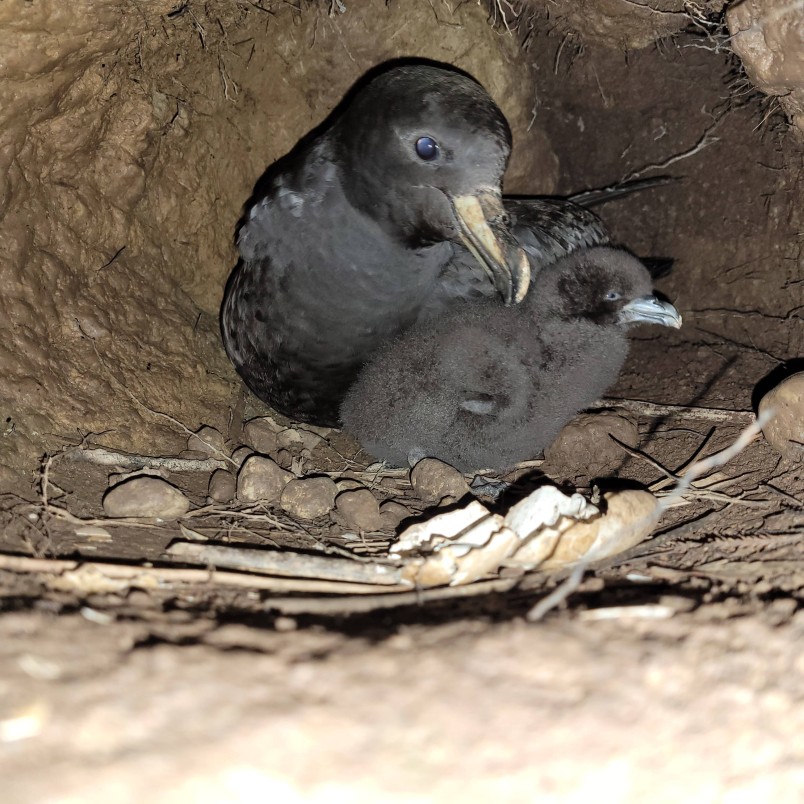
Tāiko Westland petrel adult and chick in burrow. Image DOC
Tāiko pair up to raise one egg per season, which is laid in May, and incubated through to hatching in July. Their breeding success is typically high, with about 70% of breeding attempts each year yielding a chick that survives through fledging.
However, even with this breeding success and birds living to 40 years or more, the colony is only just maintaining its numbers. Tāiko are particularly slow breeders, first breeding at between five and 10 years old, with many pairs choosing not to breed every year.
This year is particularly quiet, with only around 35% of birds breeding, added Kate. “We are working to learn more about the Westland petrels and understand why this is the case.”
Each parent takes turns incubating the egg while the other is out at sea searching for food. It is thought that it may be getting harder for the petrels to find food in some years, potentially due to more marine heatwaves, which may be having an impact on chick health.
If their mate’s return is significantly delayed, the hungry partner can abandon the egg and go in search of food themselves, causing the egg to become cold and the developing chick to die.
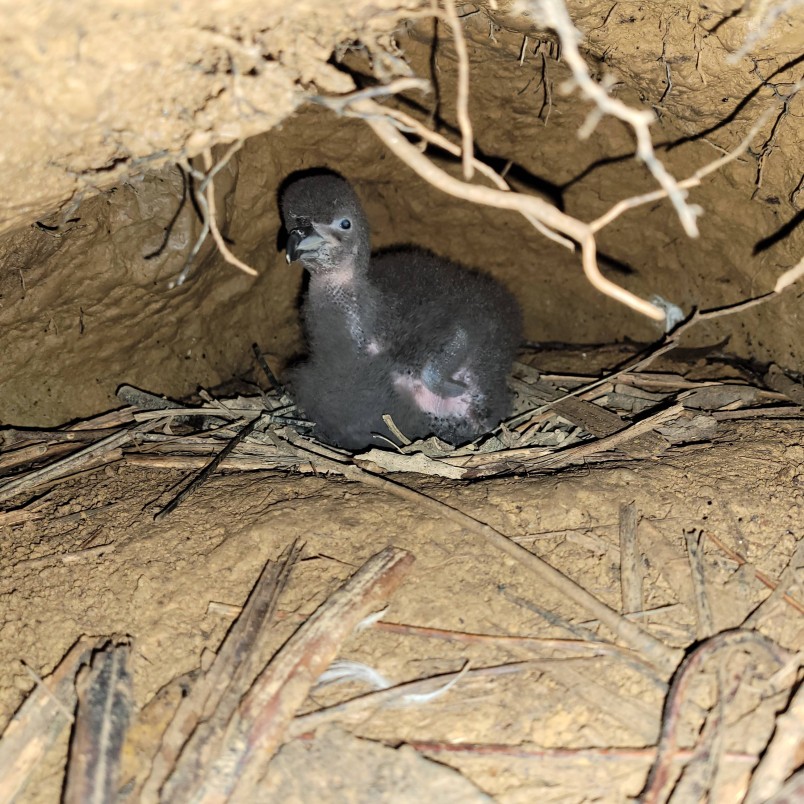
Tāiko Westland petrel chick in burrow. Image DOC
One of the main impacts on the Westland petrel population is fisheries bycatch mortality, as they are one of the most vulnerable species to bycatch in New Zealand, according to DOC.
They are also threatened by a huge proposed mineral sand mining operation at Barrytown Flats, 3.5km south of their breeding colony, which locals and Forest & Bird have been fighting.
Light pollution is also a problem for the nocturnal petrels, as they can get confused at night and crash land, injuring themselves in the process, getting run over by cars, or putting them at risk of predation.
You can support Forest & Bird’s boots-on-the-ground conservation mahi at Dick Jackson Memorial Reserve – go to forestandbird.org/donate.